
Where Ancient Wisdom Meets the Universe’s FRAMEWORK
PANCHABOOTHA ULA
The cosmological truth that predates modern physics is that everything you see, touch, and feel. Even the thoughts flickering through your mind are all made of the five fundamental building blocks called the Pancha Bhoota: Air, Water, Fire, Earth (Soil), and Space (Ether). The entire universe, every star, every matter, and even every living cell are unique combinations of these five primordial elements. These same five elements that built the cosmos also built us. “Our human body is the universe in miniature.”
This trip provides an immersive pilgrimage into the places where these fundamental forces are available in abundance and can be absorbed in their purest form: The five ancient Shiva temples are consecrated to Earth, Water, Fire, Air, and Ether, which embody, radiate, and transmit five primary manifestations of matter. These Pancha Bootha Sthalas are not ordinary temples. They are living temples, pulsing with energy, drawing millions of seekers every year, not because religion demands it, but because something deep within every human being recognizes the call of the elements from which it was made. They are energy vortices where the elemental force is believed to be so concentrated that a thorough visit can recalibrate the corresponding element within your body.
AMALGAMATION OF ELEMENT EARTH
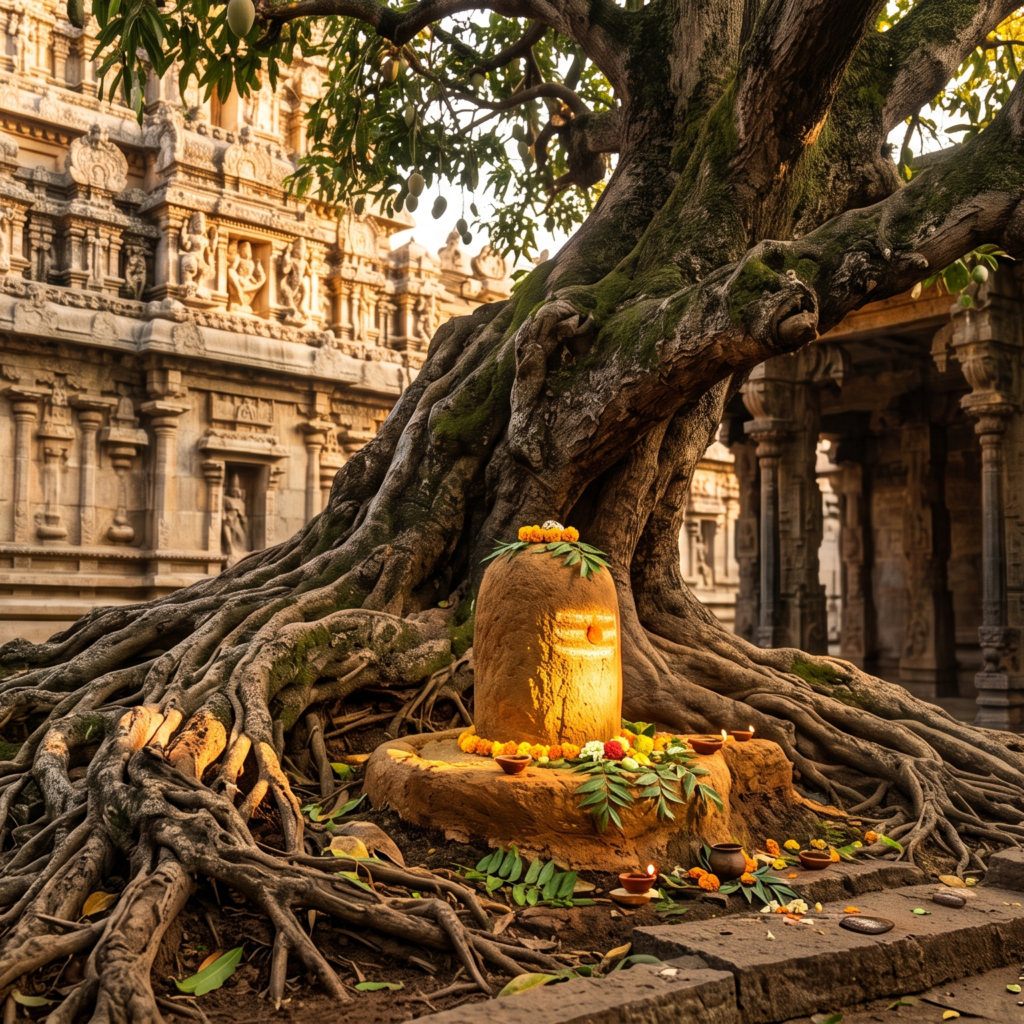
Kanchipuram famously served as the historic capital of the Pallava Dynasty, who are the visionary pioneers of South Indian temple architecture. At the heart of this architectural heritage, the Ekambareswarar Temple has a revered ancient mango tree (Sthala Vriksham) which is celebrated for yielding fruit with four distinct flavours across its branches. This tree is said to be 3,500 years old and still stands alive inside the temple today. This remarkable natural phenomenon exemplifies the fertile diversity, rich minerals, and life-sustaining potency of the soil around Kancheepuram.
Here, Shiva is worshipped as the Prithvi Lingam – the Lingam of Earth. The temple’s spiritual essence is centred upon its sacred Swayambhu Lingam, sculpted entirely from sand. Preserved upon its surface is the subtle impression of a divine embrace commemorating the legend of Goddess Parvati embracing the Lingam to protect it from rising waters. It is said that it cannot be anointed with water (Abhisheka), because contact with water would dissolve the linga, which is formed from raw earth and sand. This sacred icon stands as the quintessential shrine to the Earth Element (Prithvi Stalam).
Earth provides grounding, nourishment, and physical strength. The ritual at Kanchipuram involves worshipping an unwatered sand Lingam, which symbolizes stability. Absorbing the Prithvi element at Kanchipuram is believed to ground and stabilize the body and mind, strengthen bones and muscles, cultivate patience and endurance, and root the devotee in material and spiritual stability.
MANIFESTATION OF THE FIRE ELEMENT
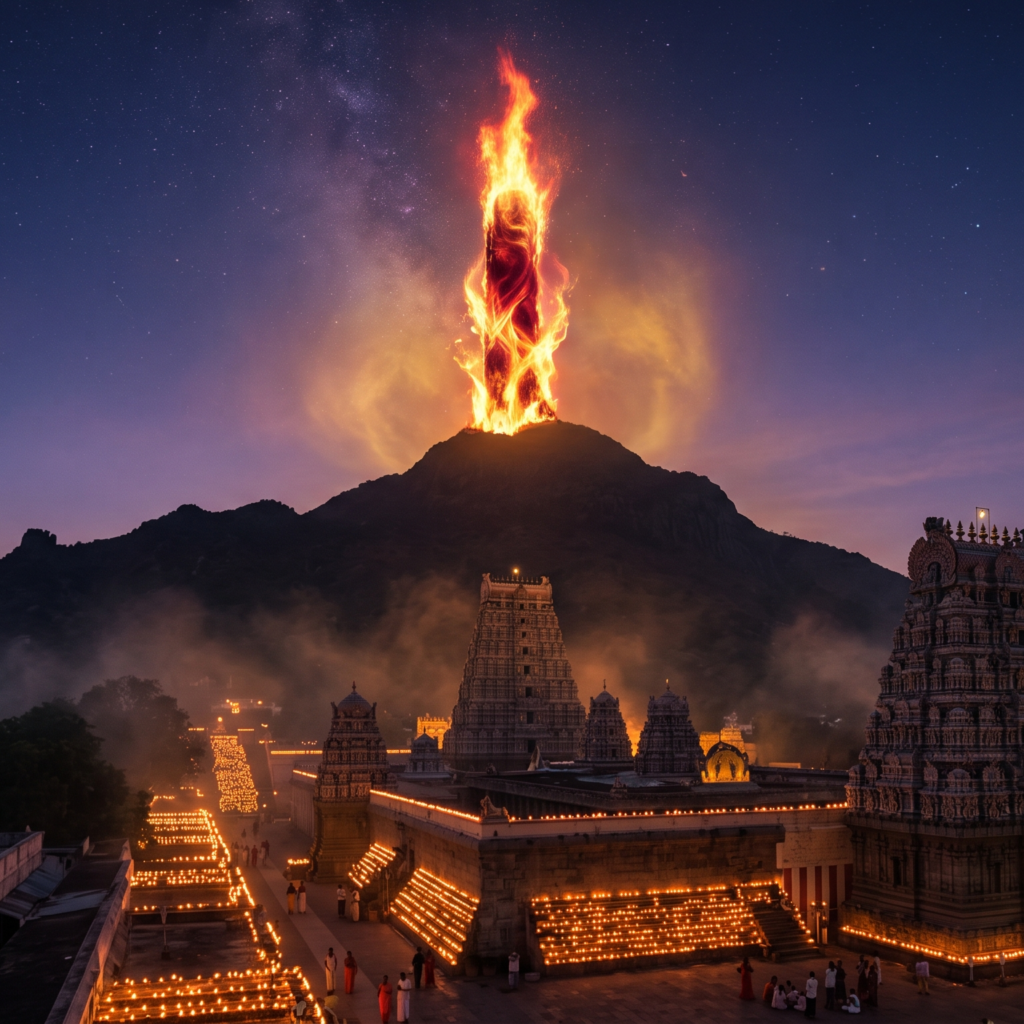
Thiruvannamalai, the majestic 800-metre Arunachala Hill, stands as the revered physical embodiment of the Fire Element (Agni). Geologically, this ancient landform is associated with volcanic activity; by then, the erupted lava shaped the surrounding landscape. This fiery heritage is celebrated during the grand festival of Karthigai Deepam, representing a massive beacon of flame lit atop the mountain’s peak. This sacred tradition honors the hill’s legacy as a cosmic column of fire and an ancient, extinct volcanic monolith.
Here, Shiva manifests as Agni Lingam – the Lingam of Fire. The entire sacred hill of Arunachala is considered to be Shiva himself in the form of a column of fire that erupted from the earth. Fire governs metabolism, digestion, focus, and transformation. Worshipping at Thiruvannamalai (and performing Girivalam / circumambulating the sacred fire-hill) fires up the digestive Jatharagni, burns off dormant metabolic toxins (Ama), transforms negative karma, and reignites clarity, drive, and spiritual perception.
Devotees participate in the traditional 14-kilometer circumambulation of the mountain, known as Giri Valam. Undertaking this sacred walk allows individuals to attune themselves to the potent energetic vibrations of the terrain, thereby assimilating and balancing the Fire Element within—reigniting inner vitality, mental clarity, and spiritual illumination. The fire of Thiruvannamalai is said to burn away ego, purify karma, awaken inner light, and restore the transformative fire (Agni) within the body – sharpening digestion, metabolism, and spiritual clarity.
RIVERINE SANCTUARY OF WATER ELEMENT
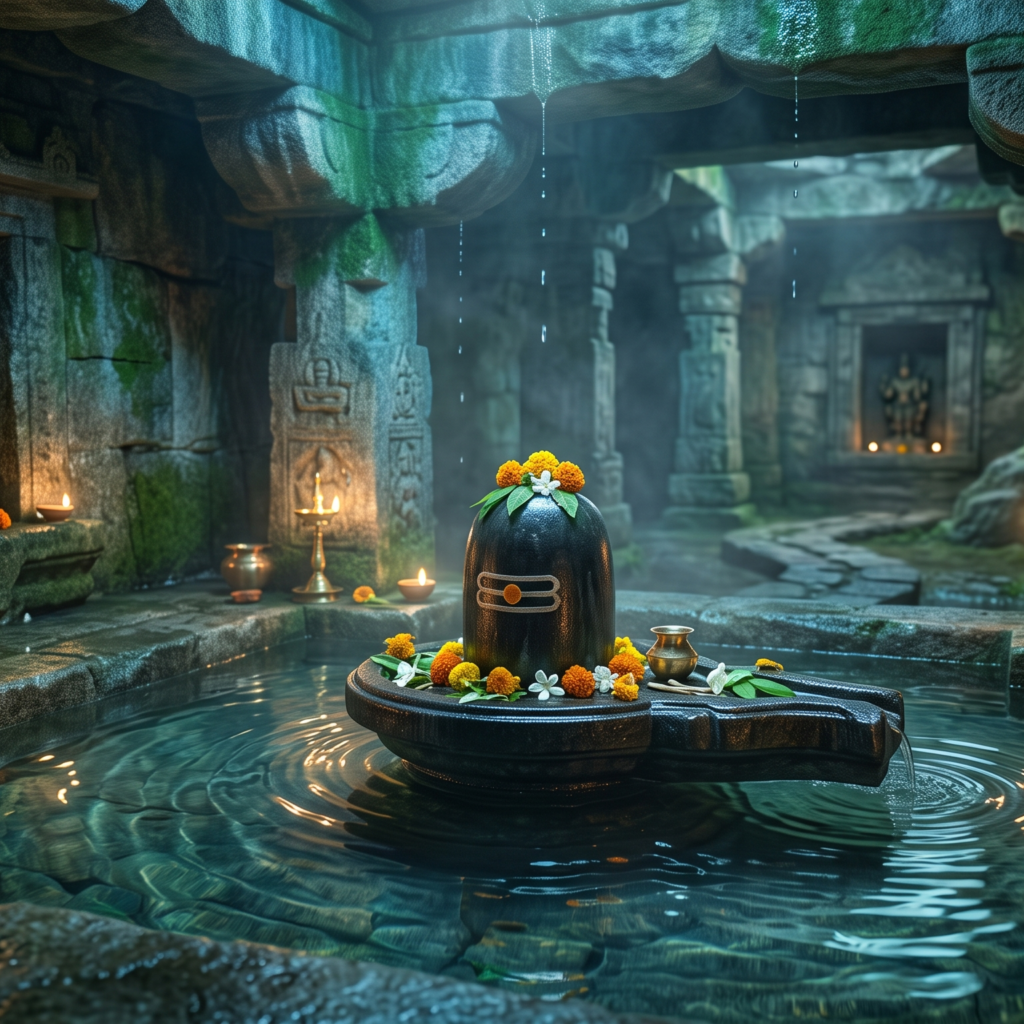
Thiruvanaikoil temple is nestled upon a riverine island encircled by the Cauvery and Kollidam Rivers that occupies a landscape deeply intertwined with life-giving waters. As the principal river of Tamil Nadu, the Cauvery created the fertile Cauvery Delta—historically celebrated as the “Garden of Southern India” and the enduring agricultural backbone of the region. The shrine stands as the supreme sanctuary of the water element (Jala / Appu Stalam). Reflecting this hydrological harmony, the temple’s sanctum sanctorum is engineered slightly below ground level, where a perpetual subterranean spring trickles continuously beneath the central idol. This constant natural flow leaves the sacred vestments draped around the deity perpetually saturated.
Here, Shiva is worshipped as Jala Lingam – the Lingam of Water. The base of the sacred Appu Lingam is continuously submerged in flowing spring water, the water level shifts with the seasons – sometimes rising to the neck of the Lingam, sometimes receding – as if the earth itself breathes. The water element here is believed to harmonize emotions, purify the blood and lymphatic system, balance hormones, and deepen compassion – the qualities governed by Jal in the human body.
Water controls body fluids, emotional flow, and toxin elimination. The humid and cool environment and sanctified water of Jambukeswarar help cleanse blood-related disorders, regulate lymphatic flow, and balance emotional turbulence. It rehydrates and purifies both the physiological and emotional body.
WIND CORRIDOR OF THE AIR ELEMENT
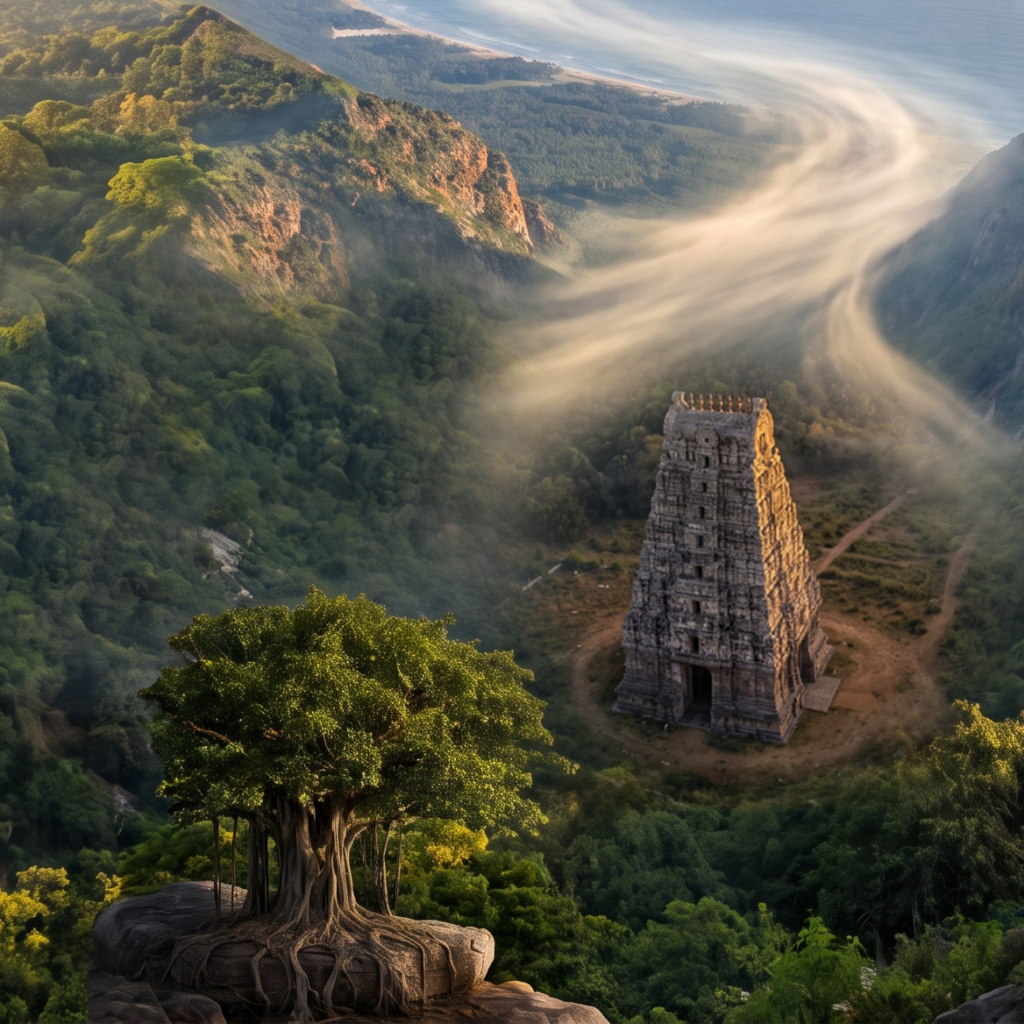
Srikalahasti historically marked the northeastern frontier of the ancient Tamil region. Geographically, it is positioned within a natural mountain pass closest to the Bay of Bengal, between the Nagari and Palkonda Hills. As the 23.5-degree axial tilt of the Earth governs global atmospheric circulation and seasonal monsoon patterns, this geographic mountain pass functions as a natural wind corridor that seamlessly channels pristine, oxygen-rich maritime breezes from the Bay of Bengal directly into the landmass. The principles of Vastu Shastra also denote the northeast (Eesanya) direction as the supreme portal for vital energy. Thus, this northeast wind passage is a sacred source of life-giving Prana.
Here, Shiva is worshipped as Vayu Lingam – the Lingam of Air. This intimate relationship with the Air Element (Vayu) is subtly encoded in the Temple’s architectural vision. The presence of a standalone Gopuram (tower), rising independently without attached outer enclosure walls, stands as a striking symbol of the Air element itself unconfined, continuous, and inherently free-flowing. The flame inside the sanctum flickers constantly, even though no wind passing by is felt in human senses. The air in this inner chamber moves in ways no human can explain. The proof of Air’s presence is tangible and awe-inspiring.
Air regulates respiration, oxygen circulation, and the nervous system. The spiritual environment at Srikalahasti aids in purifying the lungs and balancing the Prana (life force energy). It relieves stress, nervous exhaustion, respiratory blockages, and anxiety by teaching deep, conscious breathing. Pilgrimages here are traditionally undertaken to relieve breathing difficulties, skin disorders, and nervous system imbalances – all governed by the Vayu element. Absorbing the Vayu element here is believed to regulate breath, calm the nervous system, improve vitality, and free the devotee from karmic imbalances related to air and movement.
ESSENCE OF SPACE ELEMENT
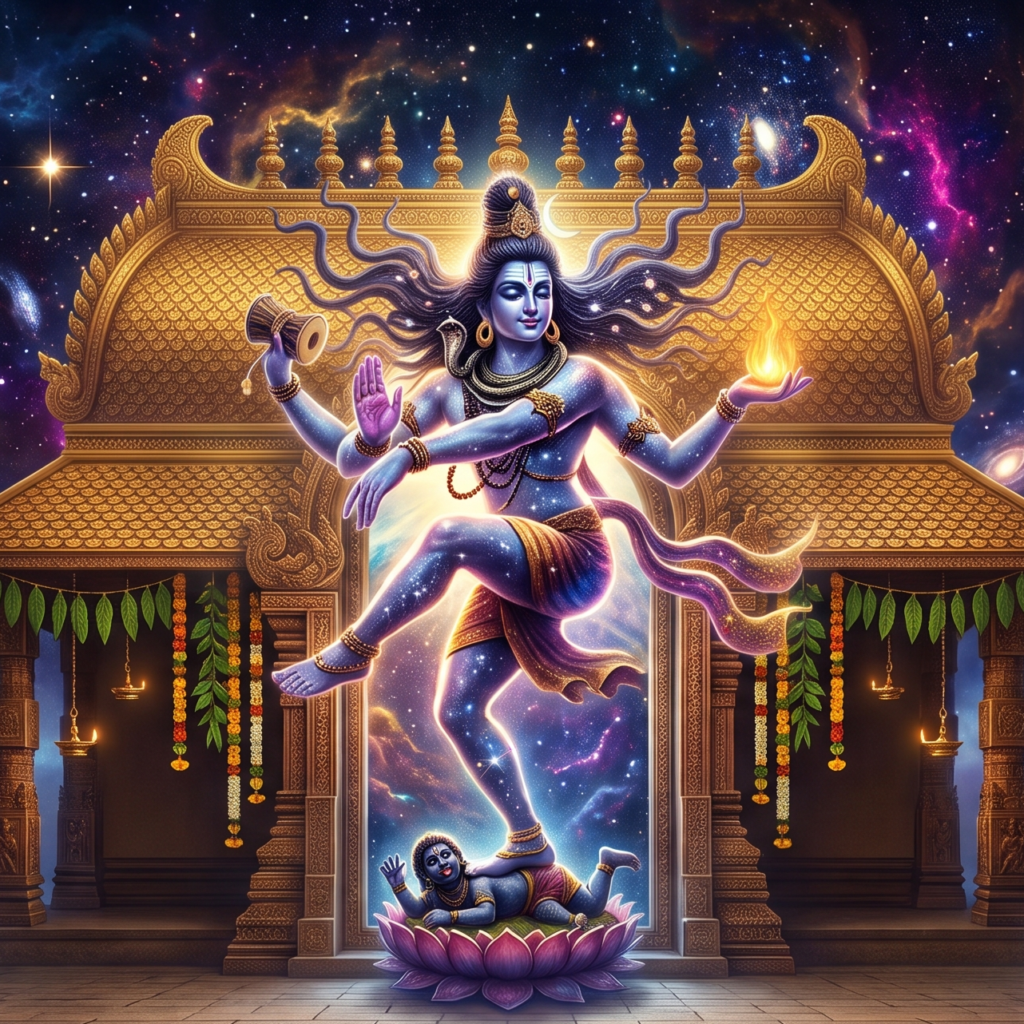
Chidambaram area is known as Thillai vanam in the ancient period, named after the dense mangrove forests of Thillai trees (Excoecaria agallocha) that once blanketed the landscape. Beyond its botanical origin, the tree carries a unique property that offers a profound metaphor for the space (Akasha) element. The milky sap of the Thillai tree, if brought into contact with the eyes, causes temporary blindness. In Tamil, the root word Illai translates to “that which is not” or “absence”. Metaphorically, during a state of temporary blindness, one remains aware that the surrounding world fully exists, even though it cannot be perceived visually. Precisely in the same manner, the element of space cannot be seen with physical eyes, yet its omnipresence is indisputable.
This spiritual paradox is beautifully encoded, as Chit (pure consciousness) and Ambaram (sky, space, or canvas) together signify a dimension that remains inaccessible to the physical senses and can only be comprehended through heightened internal awareness. This profound truth is consecrated within the temple’s main shrine by placing an empty sanctum next to the main sanctum. This reveals that the element of space cannot be captured by form and must be realized through consciousness itself.
Here, Shiva is worshipped as Akasha Lingam – the Lingam of Space. The deity here is Nataraja – Shiva as the cosmic dancer – whose dance is the very rhythm of the universe, the pulse of creation and dissolution echoing through infinite space. Space is the subtlest element—the canvas in which all other elements exist. It governs consciousness, mental clarity, and spiritual expansion. A proper visit to the Chidambaram temple is said to awaken the Akasha element within the body – expanding consciousness, clearing mental fog and opening the practitioner to higher states of perception. Reaching this space calms an overactive mind, expands awareness, dissolves ego, and restores supreme mental harmony.
The Cosmic law of correspondence between
the Macrocosm and the Microcosm
The human body is inseparable from the natural world; that pilgrimage is not superstition but a structured encounter with elemental nature, and certain geographical spots hold an energetic density that measurably affects
human physiology, psychology, and consciousness.
The Pancha Bhoota Matrix: Body vs. Universe
Prithvi (Earth / Soil) synchronizes with Bones, muscles, tissues, teeth, skin (Structure & Stability)
Earth is grounded → Stability, strength, and rootedness return
Appu / Jala (Water) synchronizes with Blood, lymph, plasma, body fluids (Circulation & Vitality)
Water is harmonized → Emotions stabilize, the body cleanses
Agni (Fire) synchronizes with Body temperature, digestion (Jatharagni), metabolic energy, intellect
Fire is purified → Metabolism and willpower ignite
Vayu (Air) synchronizes with Breath (Prana), nervous system movement, oxygenation of cells
When Air is balanced → The nervous system settles
Akasha (Space / Ether) synchronizes with Cavities in organs, mind space, higher consciousness
When Space is cleared → Consciousness expands
When these five elements are in balance, the body thrives.
When they fall out of harmony – through stress, poor diet, or disconnection from nature – Illness, fatigue, and mental unrest happen.
When a person undertakes the Thorough Pancha Bootha Yatra – visiting all five temples with intention, devotion, and awareness – something deeper than tourism happens. We step into consecrated environments designed to tune each fundamental element within us. By re-establishing harmony with Earth, Water, Fire, Air, and Space outside, the body naturally realigns its internal ecosystem—leading to profound physical rejuvenation, mental peace, and spiritual awakening. Consider this trip as a full-body elemental recalibration.
To visit these five temples is to complete a circle to return, element by element, to the source of your own existence. It is the oldest form of healing known to humanity: going back to nature, going back to the divine, and remembering what you are made of…